Set the Quotation Scope Before Comparing Prices
Start with what the buyer owns and operates after handover. A display supplier may quote only screens and brackets, while an integrator adds players, network configuration, content setup and commissioning. These boundaries matter for digital menu board cost because the cheapest visible unit price can leave the restaurant responsible for cabling, training or artwork adaptation. A written scope should name every hardware item, software entitlement, service visit, content deliverable and acceptance step. Keep optional features as separate lines rather than assuming they are included. This matters when a quote mixes indoor menu displays with other signage or when the restaurant expects future screen additions.
Lifetime cost includes electricity, cleaning, content updates, spares and support. The U.S. Department of Energy describes life-cycle cost as acquisition plus operating, maintenance and other costs over use, which is a useful discipline for restaurant owners comparing menu displays. Ask for the assumptions behind any recurring charge instead of treating the first invoice as the whole cost. If a supplier cannot explain whether a line is one-time, recurring or optional, the scope is not ready for comparison.
Separate One-Time Hardware from Recurring Costs
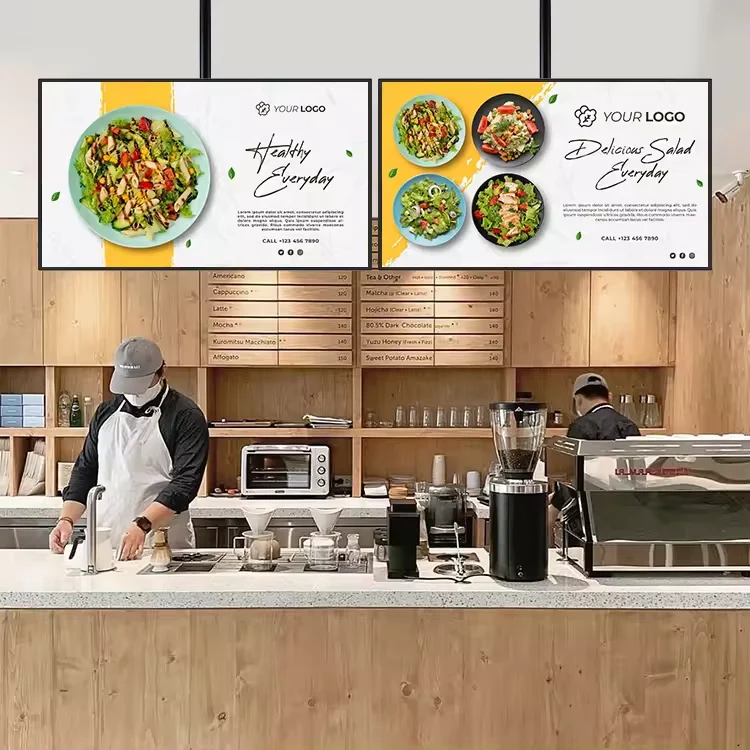
Screen count and size are the first visible variables. A single 32-inch display for a counter or a larger 43-inch unit for a menu wall changes the number of mounts, power drops, cable runs and playback outputs. The 32-inch digital menu board and 43-inch digital menu board pages show why size and mounting should be selected before a supplier prices a complete restaurant package. A buyer should request the display model, frame treatment, mounting type and player arrangement in writing.
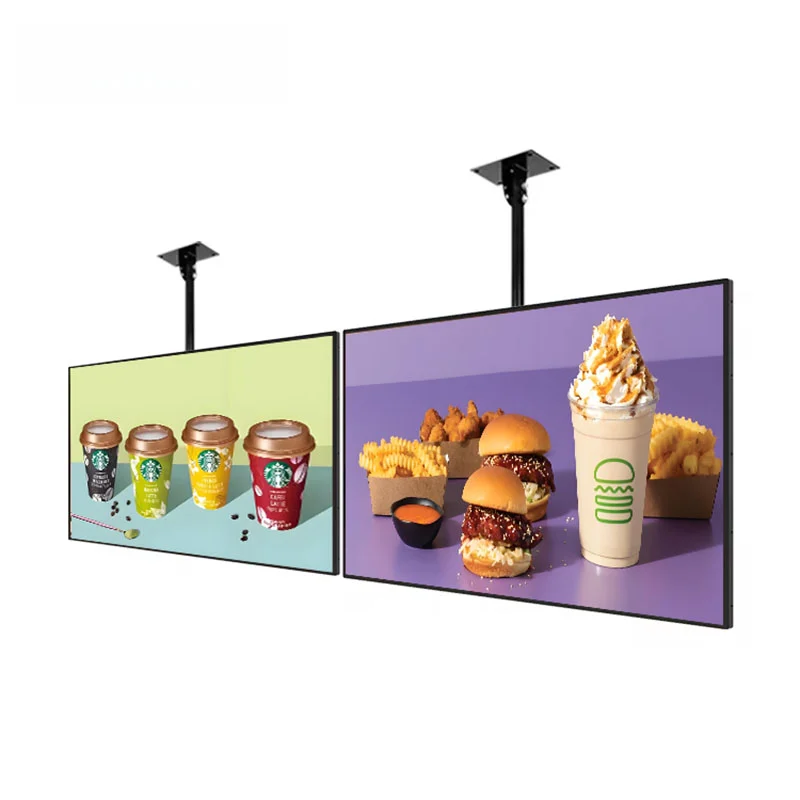
When the design uses several screens in one view, matching appearance and replacement availability deserve a place in the quote. Ask how a failed screen or player would be replaced without changing the visual balance of the menu bank. Cabling and power are not administrative details. Confirm who supplies signal cables, network connections, power outlets and any required distribution equipment. If extended warranty or a remote management service is uncertain, mark it as an option to price separately rather than letting it become an assumed inclusion.
Match Display Size and Mounting to the Menu Wall
The menu wall survey should record viewing distance, available width and height, wall or ceiling construction, power locations and the route for signal and network cables. A screen that looks suitable on a specification sheet may not fit the intended sightline or mounting surface. The digital menu board installation checklist helps turn those site observations into questions for the supplier and installer before brackets are ordered.
Mounting hardware should be quoted with the display size and weight in mind, together with whether the mount is wall, ceiling or another approved arrangement. Ask who is responsible for anchors, suspension assemblies and cable management. For a multi-screen menu, request the mounting layout and confirm that the proposed brackets allow the intended alignment. Acceptance should include checking that each display is secure, level, powered and connected as specified, not merely that boxes arrived on site.
Price the Software Workflow, Not Just a Player
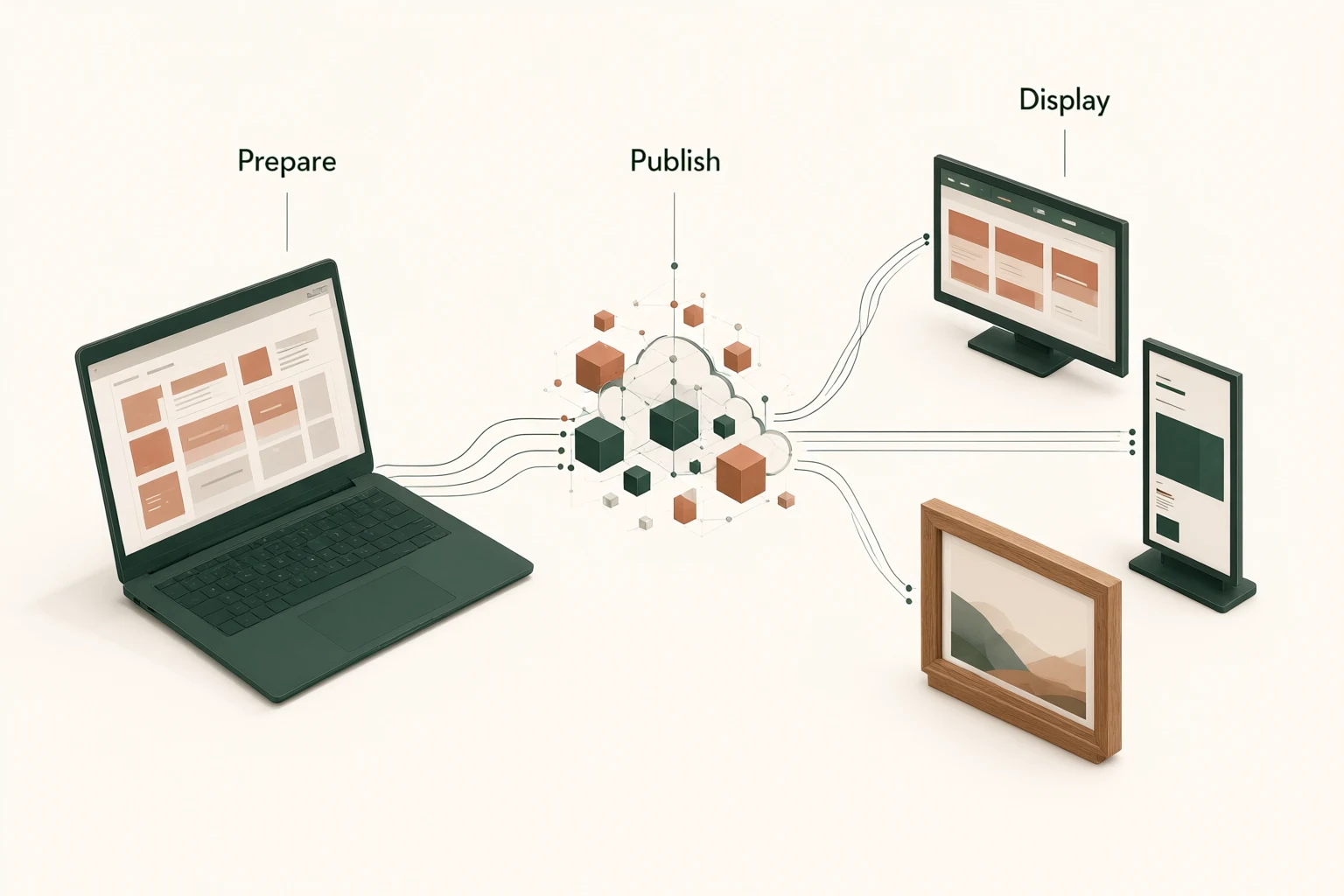
Software scope can be simple or managed. A small restaurant may choose a fixed menu loop with artwork updated occasionally, while a multi-site operator may need a content management system for playlists, scheduling and user roles. IBM's overview of content management systems describes the general function of creating, managing and publishing digital content; it does not confirm any particular menu board feature. Use that general concept to ask precise questions about who creates content, who publishes it and how changes are controlled.
Alihh describes its digital menu board range with a built-in Android system and support for remote CMS. The quotation should still identify the exact software entitlement, number of users, storage or hosting assumption, update method and training included for the selected configuration. Ask whether software is licensed, rented or supplied as a one-time setup, and separate that from content design work. The digital menu board CMS guide is the place to evaluate workflow, permissions and publishing discipline rather than treating software as a checkbox.
Account for Content Preparation and Staff Time
Menu artwork must suit the screen format. A printed menu may need rework for legibility, spacing, item hierarchy and screen orientation. Request the number of initial layouts, the number of menu items, image or video assets, language versions and the review rounds included. If the restaurant supplies artwork, state the file format and approval owner. If the supplier or a design agency prepares it, define the deliverable rather than assuming unlimited changes.
Ongoing content work is often overlooked in digital menu board cost. Price changes, seasonal dishes and promotions create recurring staff time even when the software itself is already paid for. Ask who updates prices, who approves publication and whether training covers routine changes. A cost comparison should show whether content migration from existing menus, photography and copywriting are included. Content preparation is not the same as software licensing, and combining them without labels makes quotation comparison unreliable.
Installation, Commissioning and Acceptance
Installation scope should distinguish physical mounting, cable routing, network connection, player setup, software configuration and content publication. Confirm who attends site, what access is required and which work must be completed by the restaurant or its building contractor. If the supplier provides installation, ask for a commissioning checklist and a named acceptance sign-off. If a third-party installer is used, the quotation should still say who is accountable for a working menu display at handover.
Commissioning should test the selected screens, players, network path and content workflow together. The buyer should see the intended menu displayed at the intended size and confirm that authorised staff can make an agreed sample update. Record any exclusions, such as electrical work, data cabling or building alterations, so they do not surface after installation. Acceptance is more useful when it lists pass or fail conditions than when it relies on a general statement that the system was installed.
Support, Spares and Service Terms
Electronic menu displays can fail, and a support plan should explain how the restaurant reports a fault and what happens next. Ask about warranty duration, what is covered, who pays for return or replacement, and whether spare parts are available. For a bank of matching screens, ask how a replacement display would be matched in size and appearance. This is a planning question, not a claim that every supplier keeps every model in stock indefinitely.
Service may be offered under a maintenance contract or on a call-out basis. Request the response terms, service hours, covered locations and any exclusions in writing. If a maintenance contract is optional, keep it as a separate quotation line. The same applies to extended warranty and remote support. A useful comparison shows the base purchase, the optional service level and the buyer responsibilities that remain, such as network access or first-line content checks.
Build a Complete RFQ and Acceptance Schedule
A practical RFQ gives the manufacturer enough information to quote without guessing. Include site location and environment, display count and intended size, viewing distance, wall or ceiling mounting, power and network availability, player preference, software workflow, number of users, content deliverables, installation responsibility, training needs and required acceptance checks. State whether the project is a single restaurant or a multi-site rollout, and identify any phased opening dates. Do not ask for a price against a vague screen count alone.
Ask each supplier to return a line-item scope with hardware, software, content, installation, commissioning, training, support and optional items separated. Clarify whether taxes, delivery, electrical work and data cabling sit inside or outside the quote. Use the restaurant menu display category to shortlist suitable indoor configurations, then discuss your menu display project with Alihh using the completed RFQ inputs. A clear quotation and acceptance schedule lets the buyer compare digital menu board cost on the same basis.
Frequently asked questions
What should a digital menu board quote include?
A useful quote separates displays, players, mounts, cabling responsibility, software entitlement, content preparation, installation, commissioning, training, warranty and optional support. It should also state exclusions such as electrical work or building alterations so the buyer can compare scopes rather than headline figures.
How do software and content affect digital menu board cost?
Software may be licensed, rented or supplied as part of a configured system, and content work may include menu layout, artwork adaptation, image preparation and update training. Ask who creates, approves and publishes content, how many users need access and whether ongoing updates are handled in-house or under a separate service arrangement.
What information should we send for an accurate quotation?
Send the site environment, number and intended size of displays, mounting arrangement, power and network availability, preferred player or software workflow, content deliverables, installation responsibility, training needs and acceptance requirements. For multi-site projects, include the rollout plan and any phased opening dates.
Sources and further reading
External references explain general planning principles. They do not establish Alihh product compatibility or model-specific specifications.